Database Tuning
Database Optimization: Turning Slow Systems into High-Performance Applications
In modern software development, database performance is often the difference between a fast, scalable application and one that struggles under heavy traffic. Throughout my career as a Senior Software Engineer and AI Developer, I have optimized databases powering e-commerce platforms, CRM systems, booking engines, and enterprise web applications.
Why Database Optimization Matters:
===========================================
As applications grow, inefficient database design can lead to:
Slow page loading times
High server resource consumption
Poor user experience
Increased infrastructure costs
Scalability limitations
A well-optimized database enables applications to handle millions of records and thousands of concurrent users efficiently.
1. Schema Design
===========================================
The foundation of database performance starts with proper schema design. I use normalization techniques to reduce data redundancy while maintaining efficient relationships between tables.
Key improvements include:
~~~~~~~~~~~~~~~~~~~~~~~~~
Optimized table relationships
Proper foreign key implementation
Data normalization
Strategic denormalization where performance requires it
Benefits:
~~~~~~~~~~~~~~~~~~~~~~~~~
Reduced storage requirements
Improved maintainability
Faster joins and lookups
2. Indexing Strategy
===========================================
Indexes are one of the most powerful performance optimization tools available.
I regularly implement:
~~~~~~~~~~~~~~~~~~~~~~~~~
Single-column indexes
Composite indexes
Covering indexes
Full-text search indexes
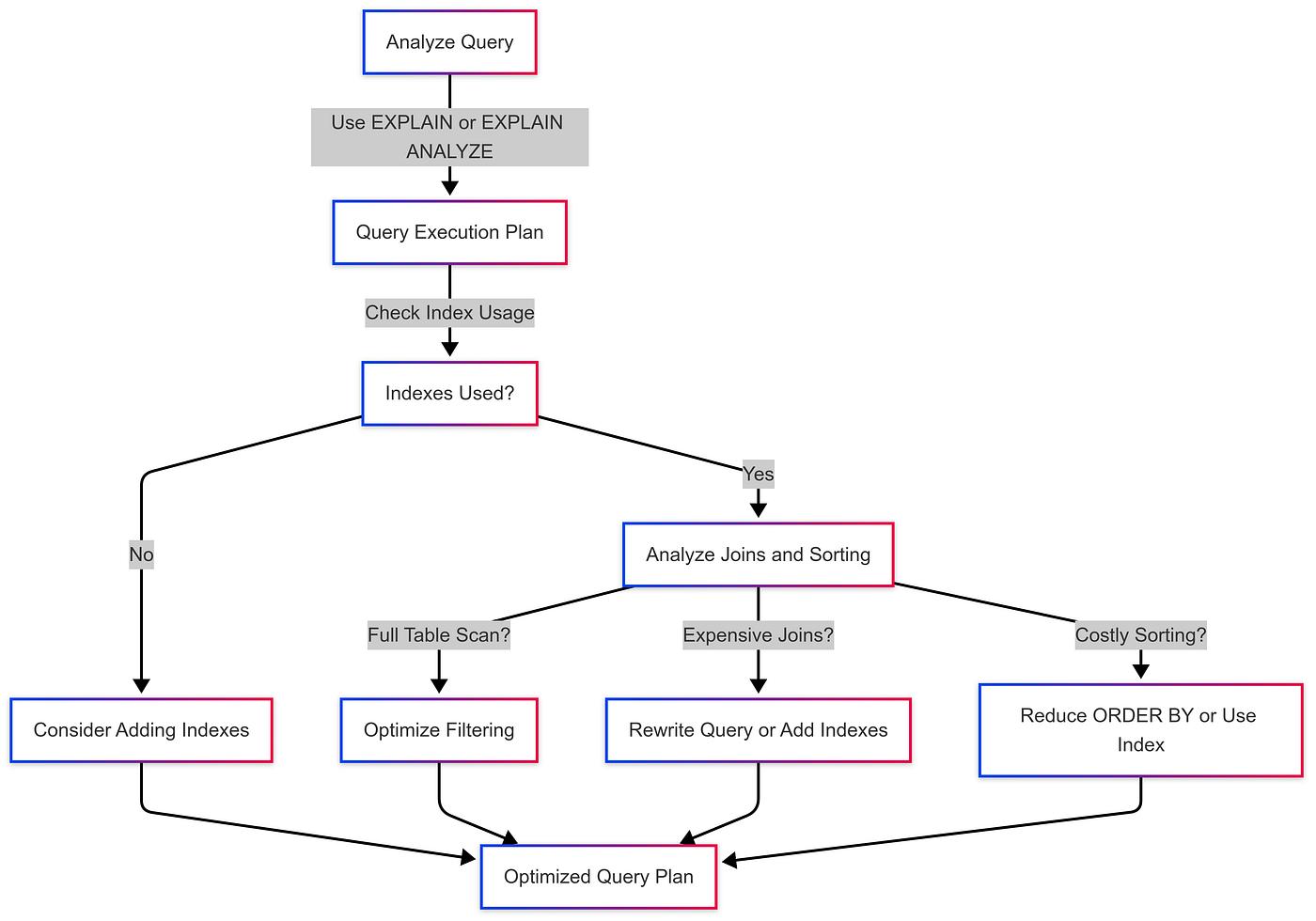
Using query execution plans and performance analysis, I identify bottlenecks and create indexes that dramatically reduce table scans and improve response times.
3. Query Optimization
===========================================
Poorly written SQL queries can become major performance bottlenecks.
Common optimizations include:
~~~~~~~~~~~~~~~~~~~~~~~~~
Eliminating N+1 query problems
Reducing unnecessary joins
Avoiding SELECT *
Optimizing aggregation queries
Using pagination efficiently
Tools such as EXPLAIN help analyze execution plans and identify opportunities for improvement.
4. Redis Caching
===========================================
To reduce database load, I implement Redis caching for:
~~~~~~~~~~~~~~~~~~~~~~~~~
Dashboard statistics
Session management
Frequently accessed records
API responses
Caching often reduces database traffic by more than 80% while significantly improving application responsiveness.
5. Connection Management
===========================================
Efficient database connection handling is critical for high-traffic systems.
Techniques include:
~~~~~~~~~~~~~~~~~~~~~~~~~
Connection pooling
Persistent connections
Read/write database separation
Load balancing across replicas
These approaches improve stability and prevent connection exhaustion under peak load.
6. Monitoring and Maintenance
===========================================
Optimization is an ongoing process rather than a one-time activity.
My monitoring stack typically includes:
~~~~~~~~~~~~~~~~~~~~~~~~~
MySQL Slow Query Logs
AWS CloudWatch
Performance dashboards
Regular maintenance tasks include:
~~~~~~~~~~~~~~~~~~~~~~~~~
Query analysis
Index reviews
Database backups
Table optimization
Capacity planning
Results Achieved
Across multiple production systems, these optimization strategies have delivered:
~~~~~~~~~~~~~~~~~~~~~~~~~~~~~~~~~~~~~~~~~~~~~~~~~~~~~~~~~~~~~~~
Up to 95% faster query execution
60% lower database CPU utilization
80% reduction in database requests through caching
Sub-second response times for large-scale applications
Improved scalability for millions of records
Technologies
I have applied these techniques using:
~~~~~~~~~~~~~~~~~~~~~~~~~~~~~~~~~~~~~~~~~~~~~~~~~~
MySQL
PostgreSQL
Redis
Laravel
CodeIgniter
Flask
Django
AWS RDS
Database optimization is not just about making queries faster—it is about building systems that remain reliable, scalable, and cost-effective as businesses grow. By combining schema design, indexing, query tuning, caching, connection management, and monitoring, I create data-driven applications capable of supporting enterprise-level workloads.
Timeline updates will appear here once dated entries are added in the builder.